

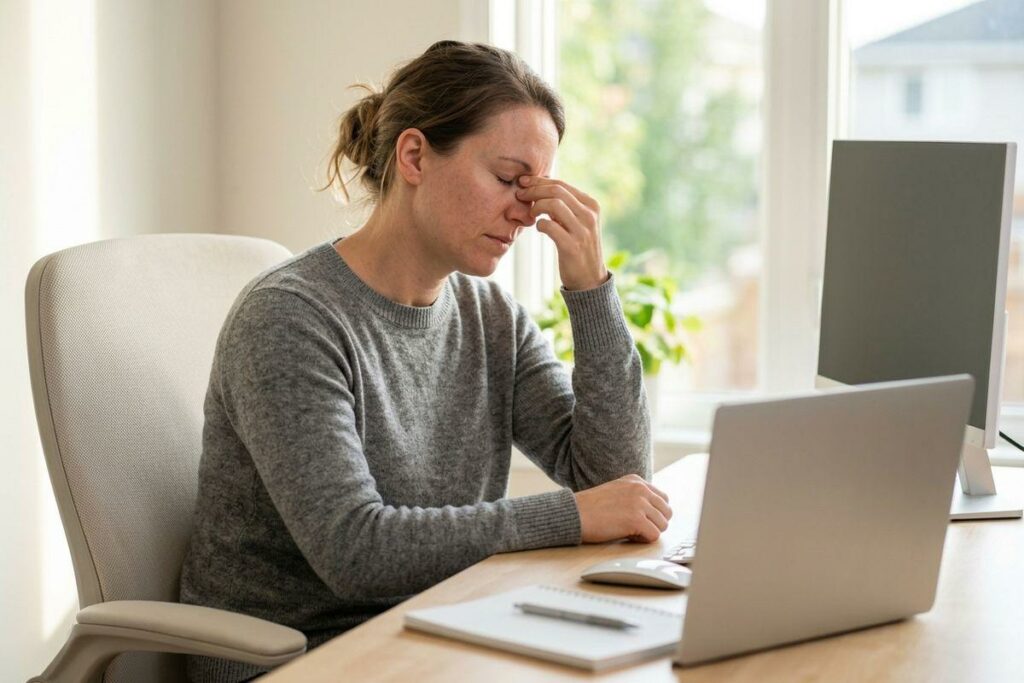
Sore eyes are hard to ignore. They follow you from your desk to your commute and make small tasks feel like more work than they should be.
Your eyes can hurt for a long list of reasons, including digital strain, dryness, infections, styes, contact lens habits, sinus pressure, or something sitting on the surface of your eye. A few clear up on their own, though it takes an optometrist to pin down what’s actually causing the discomfort.
What Eye Pain Can Feel Like
Eye pain doesn’t show up the same way for everyone. Some days it’s a low, dull ache behind your brow. Other days it burns, stings, or feels like a quick stab. What comes with the pain matters. Redness, watery eyes, and a strong urge to squint in a bright room all give your optometrist something to work with.
Pay attention to where the pain sits. Surface pain usually feels scratchy, like something’s stuck on your eye, while deeper pain feels heavier and more like pressure. Mention which one you’re feeling at your appointment, because that detail narrows things down fast.
Screen Time and Eye Strain
Long hours on a laptop or phone mean you blink less than you normally would. By mid-afternoon, your eyes feel tired and achy, and text on the screen can look blurry.
Headaches sometimes come with it. Dim lighting, glare off a nearby window, or an out-of-date prescription can make the ache worse.
Raise your monitor so you’re looking slightly down at it, and move it about an arm’s length away.
If screen-related discomfort keeps coming back, an eye exam can help determine whether digital eye strain, an outdated prescription, or another vision issue is contributing. Kennedy Eye Clinic also offers digital eye strain care and Neurolens assessments for patients whose symptoms may involve problems with how their eyes work together.
Dry Eye
Dry eye tends to feel gritty, itchy, and warm, like there’s sand under your lids. Dry indoor air and heating can make dry-eye symptoms worse, especially in winter. Age and some medications, including antihistamines and certain prescription or over-the-counter medicines, can also play a role.
Watery eyes can also be part of the picture. An irritated surface triggers a flood of reflex tears that don’t coat the eye properly.
If artificial tears and lifestyle changes aren’t providing enough relief, dry-eye treatment can go beyond lubricating drops. Kennedy Eye Clinic offers personalized dry-eye assessments to identify what may be contributing to your symptoms. Depending on the type and severity of dry eye, treatment options may include prescription eye drops, punctal plugs, scleral contact lenses, serum drops, or in-office treatments.
For patients with meibomian gland dysfunction (MGD), Kennedy offers treatments such as LipiFlow, intense pulsed light (IPL), radiofrequency (RF), low-level light therapy (LLLT), Jett Pen, and ZEST eyelid cleansing treatment. The right option depends on what’s contributing to your dry eye and the findings of your assessment.
Eye Infections, Styes, and Sore Eyelids
Some soreness comes from an infection or from swelling along the lid. Here’s what you might notice:
- Pink eye, with redness, discharge, and itchiness
- A stye, which is a tender bump along the edge of your eyelid
- Eyelid inflammation that leaves your lids puffy and crusted in the morning
- Light sensitivity that turns up alongside the redness
Hold a warm compress against the lid for 10-15 minutes to help a stye settle. Wash your hands often so an infection doesn’t travel to the other eye, and skip eye makeup until things clear up.
Something in Your Eye or an Eye Injury
If you think dust or an eyelash is in your eye, try gently rinsing with clean water or sterile saline. Don’t rub or try to remove an object that’s embedded in the eye. Seek prompt care if the sensation or pain persists.
Contact Lens Habits That Cause Sore Eyes
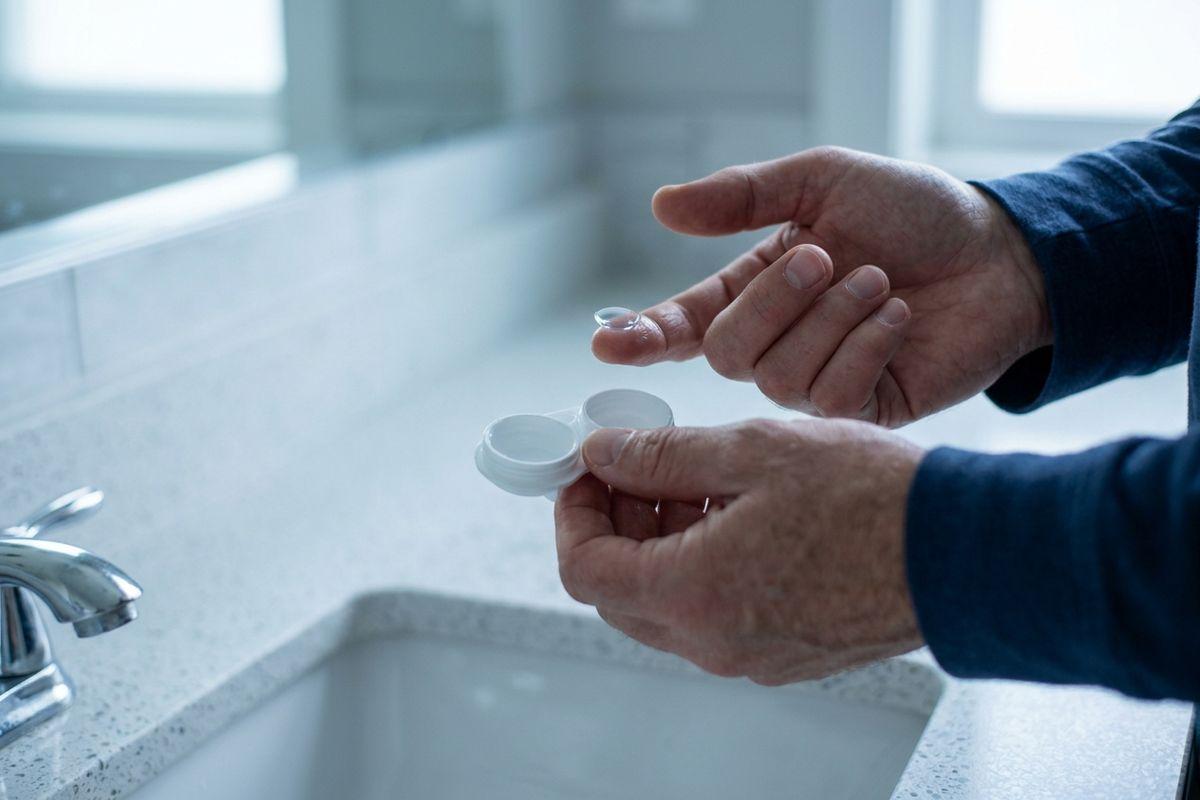
Contacts can start to sting after a long day. Wearing them for too many hours, sleeping in them, or skipping a cleaning can leave your eyes red and sore by evening.
The same goes for using the wrong solution or stretching a pair past its replacement date. Switch to glasses 2 evenings a week and see whether the soreness eases.
Sinus Pressure and Sore Eyes
Congestion can leave a deep ache behind your eyes during allergy season or a head cold, since the sinuses sit right below and behind your eye sockets.
Short sleep does something similar. A few late nights in a row can leave your eyes dry and tender before you’ve even opened your laptop.
Signs You Shouldn’t Wait to Get Checked
A few symptoms shouldn’t wait for the next open spot in your week. Call for an urgent appointment if you notice any of these:
- Sudden, severe pain
- A change in your vision
- Eye pain along with nausea, vomiting, or a bad headache
- Pain after an injury or a chemical splash
- Light sensitivity that comes on quickly
Everyday Habits That Can Ease Sore Eyes
The 20-20-20 rule fits into most workdays without much effort. Every 20 minutes, look at something 20 feet away for 20 seconds. Set a quiet timer if you tend to lose track.
Reach for lubricating drops on long screen days, and run a humidifier at home when the air dries out. Outside, UV-blocking sunglasses can cut the glare, whether you’re shovelling the driveway or out on the water in July.
What an Eye Exam Can Tell You About Eye Pain
An exam helps narrow down what’s behind the pain so you’re not left guessing. From there, your optometrist can update your prescription, walk you through dry eye treatment, or check how your contact lens fit is holding up.
We’ll also look at the surface of your eye under magnification, which shows scratches, blocked oil glands, and inflammation you’d never spot on your own.
If your eye is healing from a scratch or an infection, a second visit shows how things are coming along.
Stop Guessing About Your Sore Eyes
Sore eyes shouldn’t be something you push through week after week. Whether your symptoms are coming from digital strain, dry eye, contact lenses, an irritated eyelid, or something else, finding the cause is the first step toward finding the right treatment.
Come see us at Kennedy Eye Clinic and we’ll take a closer look, then explain what we find in plain language. Book an appointment and get some answers.