

Key Takeaways
- Ocular rosacea is the inflammation of the eyes and eyelids, often linked with rosacea on the face.
- Eye symptoms can show up before any changes to your skin.
- Red, burning, gritty, watery eyes, and recurrent styes are common signs.
- Heat, sun, wind, alcohol, spicy food, and stress can set off flare-ups.
- Cold compresses, gentle eyelid cleaning, and lubricating drops can ease irritation.
- Regular eye exams help protect the cornea and can keep symptoms in check.
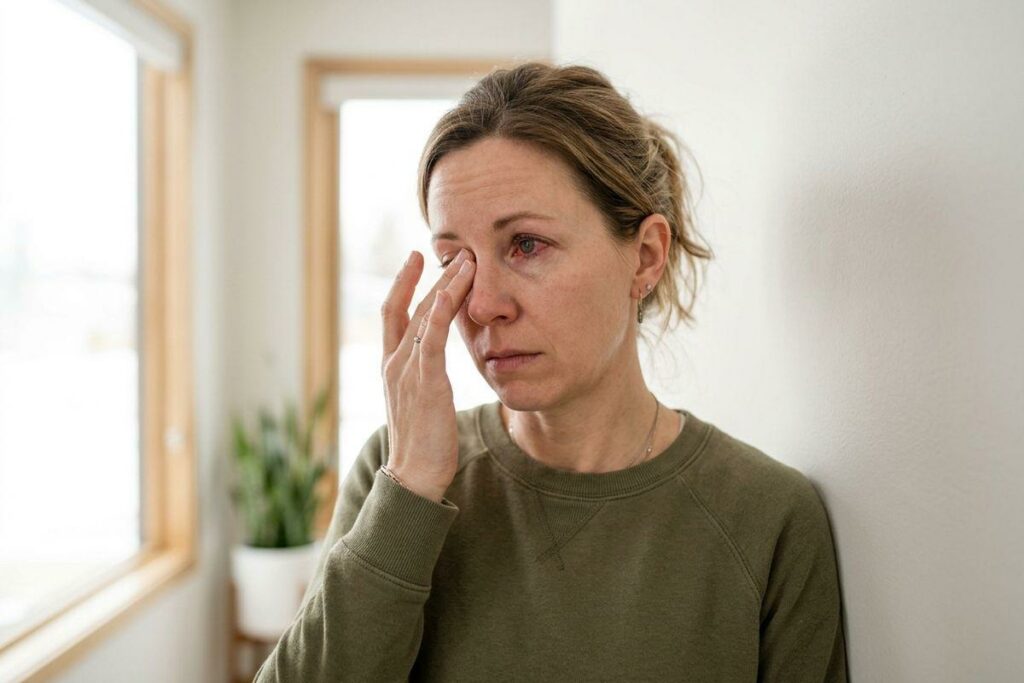
Your eyes sting by mid-afternoon. They water in the wind, feel sandy by bedtime, and look pink in every photo. Drops help for an hour, then the burning creeps back. Our team at Kennedy Eye Clinic hears this story often. You’ve started blaming screens, allergies, and dry Saskatchewan air, but nothing quite explains why this keeps happening month after month.
Ocular rosacea is a long-term inflammation of the eyes and eyelids, often connected to rosacea on the face, and it can leave your eyes red, gritty, and irritated even when your skin looks fine.
What Is Ocular Rosacea?
Ocular rosacea affects the surface of your eyes and the edges of your eyelids. It’s inflammation, not an infection you caught from someone.
Many people who have it also have rosacea on their face, the kind that brings flushing across the cheeks and nose. The eye version often appears with the skin version, though the two don’t always arrive together. Sometimes your eyes speak up first, months or years before your skin shows a single change. That’s part of why the connection gets missed for so long.
Signs and Symptoms to Watch For
Symptoms tend to come and go, which makes them easy to shrug off. Here’s what to pay attention to:
- Red, burning, scratchy, or watery eyes
- Dryness, grittiness, or the feeling of something stuck in your eye
- Sensitivity to light
- Blurry vision
- Swollen eyelids
Recurrent Eyelid Problems
Styes that keep returning are worth mentioning at your next appointment. So are chalazia, the firm lumps that sit in the eyelid. Recurrent eyelid inflammation or pink eye is also worth discussing with an eye-care professional.
Take a close look at your lid margins in the mirror, too. Crusting along the lash line or changes in the eyelid margins can be signs of eyelid inflammation and are worth mentioning during an eye exam.
Why You Might Get Ocular Rosacea
The exact reason it develops isn’t known. Researchers have connected it to a mix of things, including family history, environmental factors, blocked glands along the eyelid, and eyelash mites. Ocular rosacea is most commonly seen in adults, particularly those between 30 and 50.

Common Flare-Up Factors
Once you have it, certain things can set off a flare. Tracking yours helps you spot patterns. These can include:
- Hot or spicy food and alcohol
- Sun exposure, wind, and temperature extremes
- Stress
- Heavy exercise
- Hot baths or saunas
Ocular Rosacea and Meibomian Gland Dysfunction
Ocular rosacea can overlap with meibomian gland dysfunction (MGD), a condition where the oil-producing glands in your eyelids become blocked or don’t function properly. These glands help keep your tears from evaporating too quickly. When they aren’t working well, you may notice burning, grittiness, or watering.
This is one reason ocular rosacea and dry eye symptoms can sometimes show up together. At Kennedy Eye Clinic, a dry eye assessment can look at factors such as your tear film, meibomian gland function, tear evaporation, and tear volume to help determine what’s contributing to your symptoms.
How to Calm Irritated Eyes
A cold compress held over closed eyes for a few minutes can help soothe irritation and take the edge off during a flare-up. Follow it with gentle eyelid cleaning if your eye-care professional recommends it. Lubricating drops can also help with the dry, sandy feeling, especially during long stretches at a screen.
Outdoors, wraparound sunglasses with UV protection cut down on sun and wind hitting your eyes, which are two factors you can actually block.
It’s important to avoid anything that seems to trigger or worsen your flare-ups. If you’re unsure which approach is right for you, an eye-care professional can recommend a routine based on your symptoms and eyelid health.
Treatment Options
Home care can help with many symptoms, but not everything. When eyelid debris or inflammation is contributing to symptoms, an in-office eyelid treatment may also be considered. Kennedy Eye Clinic offers ZEST (Zocular Eyelid System Treatment), which is designed to gently clean and exfoliate the eyelid margins and remove debris and buildup around the eyelids and lashes.
In some cases, other in-office treatments, such as IPL (Intense Pulsed Light), may be recommended to address inflammation, meibomian gland dysfunction, or other factors contributing to dry eye symptoms. Treatment is tailored to your symptoms and the health of your eyelids and eyes, so your care plan may look different from someone else’s.
How Long Ocular Rosacea Lasts
Ocular rosacea is a long-term condition. Symptoms rise and settle, quiet for weeks, then noisy again.
Routine care makes a real difference in how often flare-ups show up and how rough they feel when they do. Steady habits help more than scrambling for relief.
Why Regular Eye Exams Matter
Left alone, inflammation can affect the cornea, the clear front layer of your eye. That’s the part doing the heavy lifting for your vision, so keeping it comfortable matters.
Early care supports both comfort and clear sight. And if your doctor has already diagnosed you with rosacea on your skin, ask about eye checkups, even if your eyes feel fine right now.
Our team at Kennedy Eye Clinic can take a close look at your eyelids and eye surface, sort out what’s behind the irritation, and build a plan around your day-to-day life. Book your eye exam and give your eyes a break.